Barcelona, Indoors

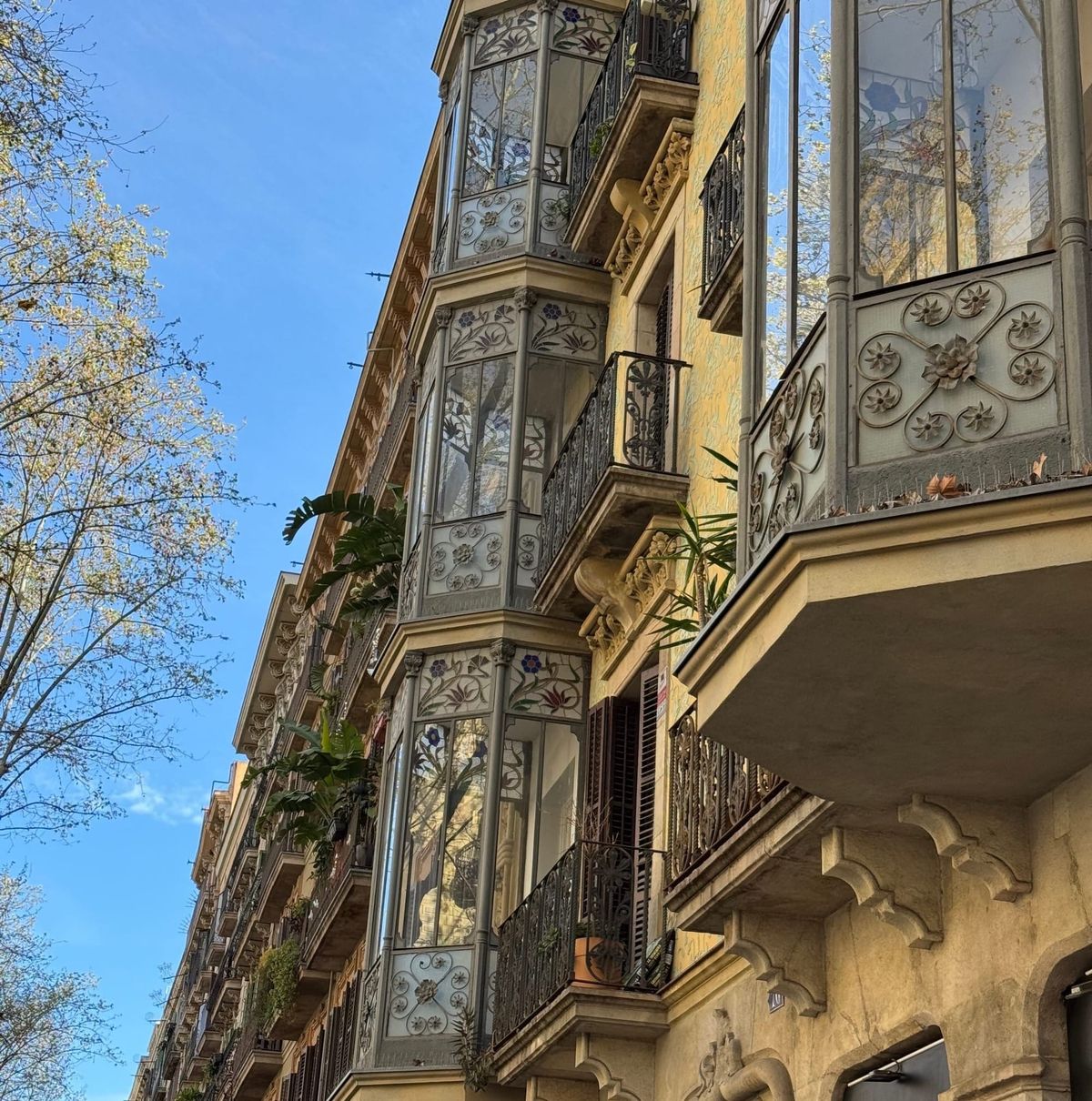
There is a version of Barcelona everyone knows before they ever live here. Balconies, façades, sunlight, shutters, washing hanging somewhere several floors above a narrow street. The city is extraordinarily good at presenting itself from the outside.
Living here means discovering another Barcelona: the one behind the front door.
One of the first things a friend noticed when she visited our flat was the ceiling.
“Your ceilings are so high.”
Then she looked at the decorative mouldings.
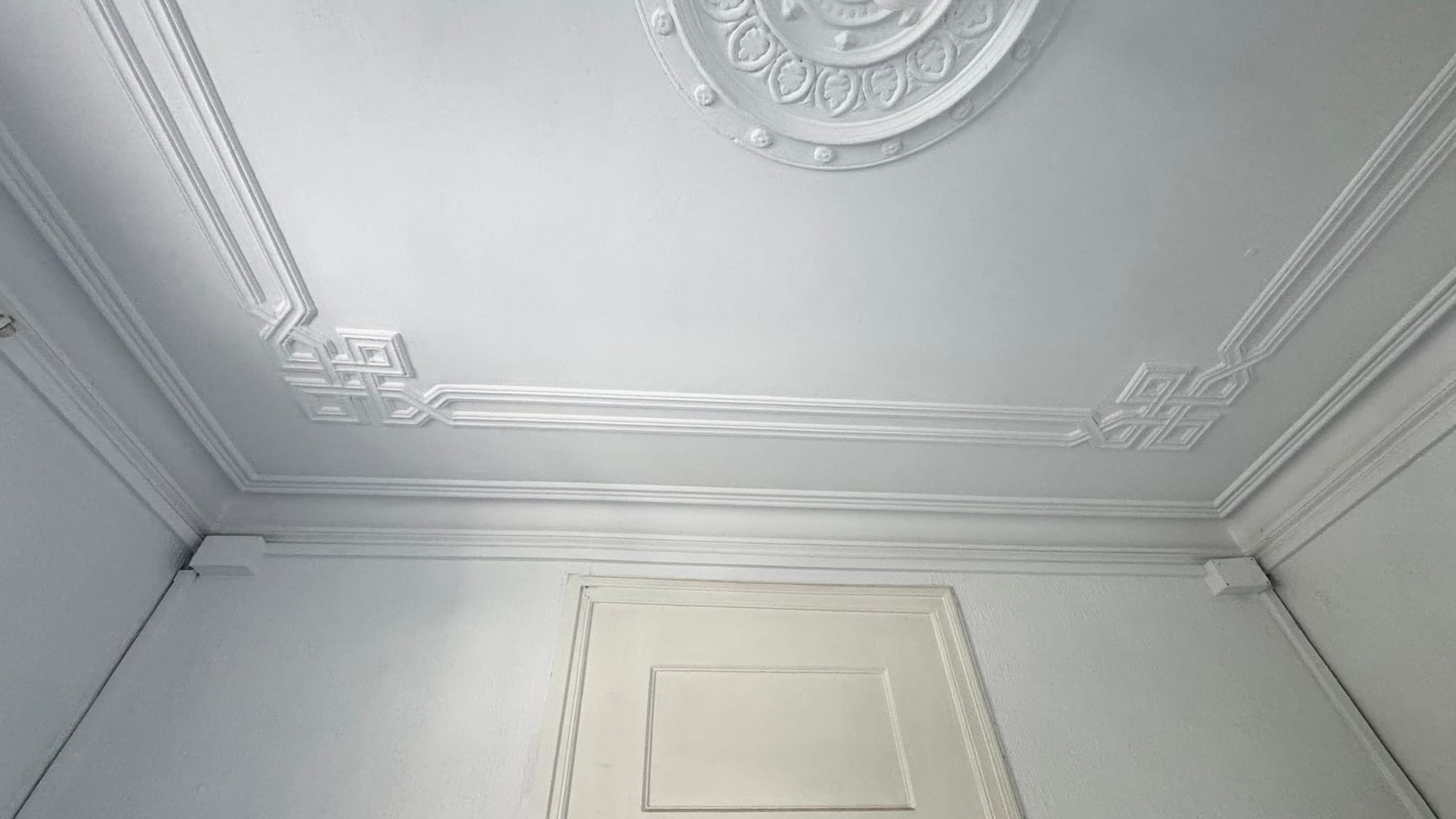
They do make an ordinary flat feel unexpectedly grand. This is something I have noticed in many older Barcelona buildings: you can be standing in a perfectly normal apartment, not a palace and certainly not an architectural monument, while several metres above your head the ceiling is decorated as if somebody had briefly developed aristocratic ambitions.
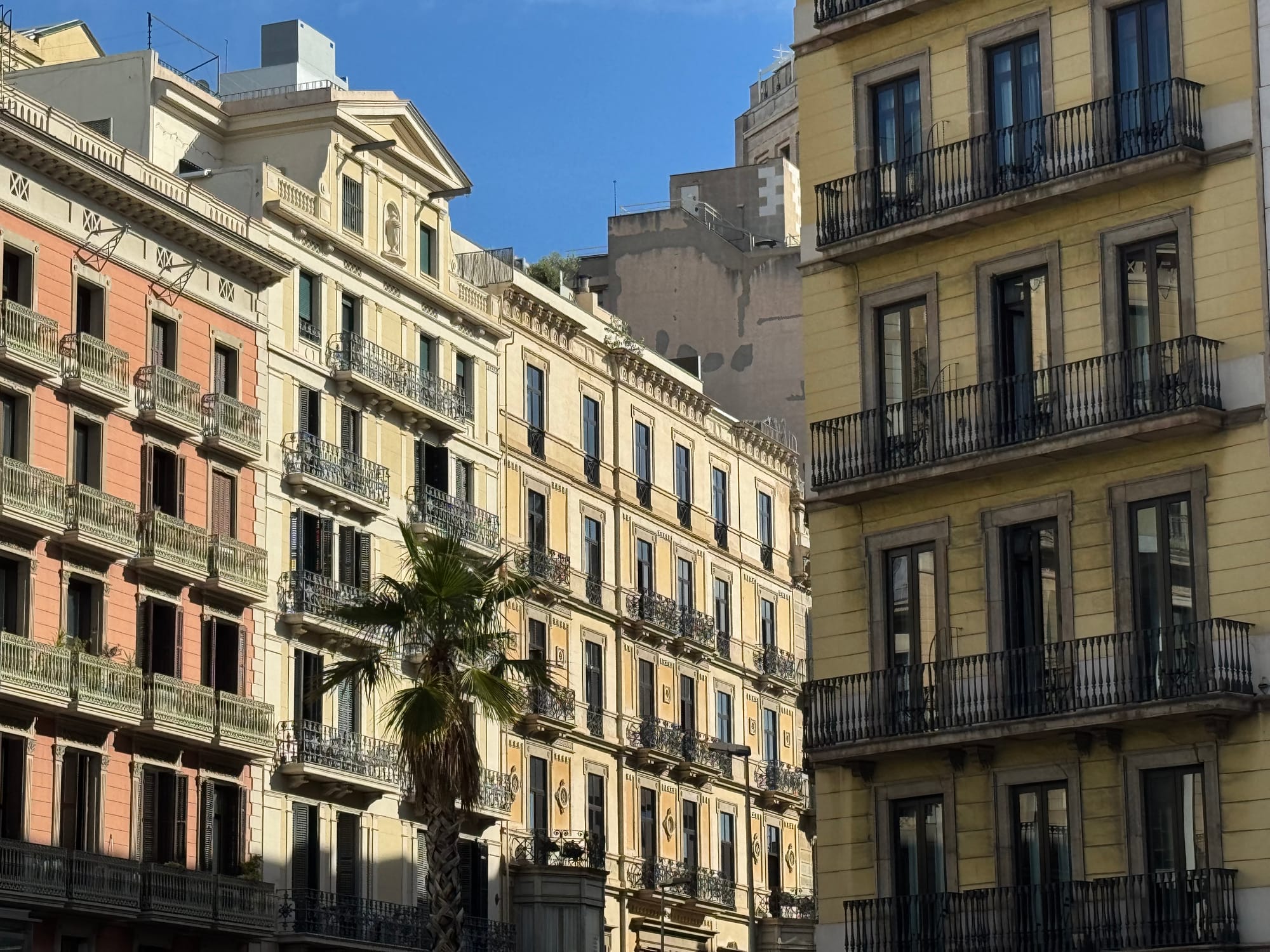
You can see the proportions from the street, too. Walk through the Eixample and look upwards: tall balcony doors, high floors, elaborate façades. The scale of the rooms behind them is often quite different from what I grew up considering a standard flat.
This is not going to become an essay about how terrible old Mediterranean flats are. Ours works extremely well for us.
What interests me instead are the little things you begin to notice once Barcelona stops being a city of streets and becomes a place in which you actually have to sleep, cook, cool a room down in August and warm it up in January.
Take the walls.
Spain has gotelé: that unmistakable rough, stippled wall texture which can make somebody unfamiliar with it wonder what exactly happened to the plaster. It became particularly widespread during the enormous housing boom of the 1960s and 1970s, when textured finishes offered a very practical advantage: they concealed imperfections and did not require perfectly smooth walls.
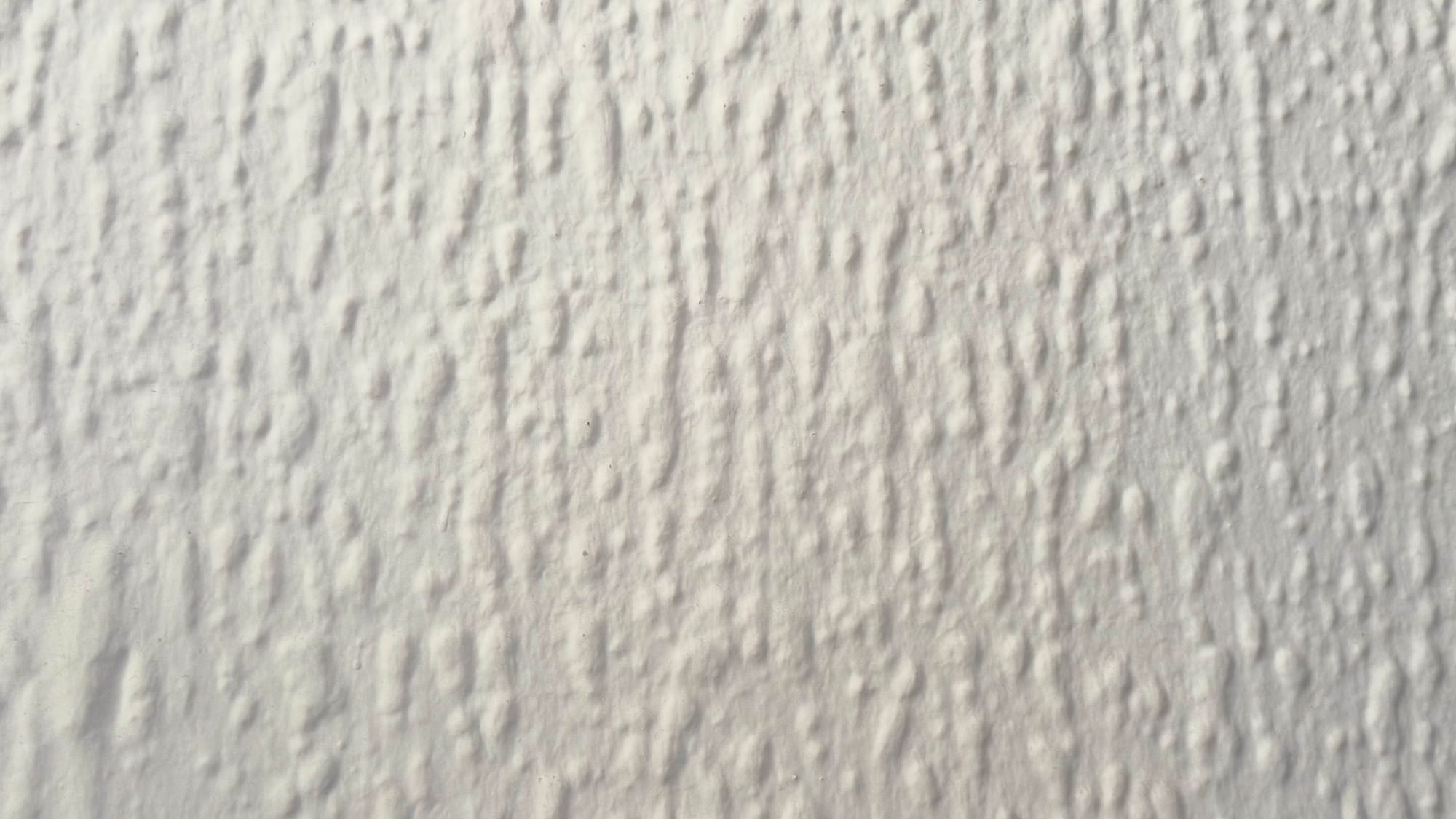
I understand the appeal more than I probably should.
In my house in Poland, I once removed old wallpaper in a hallway and discovered walls I had absolutely no desire to spend the next century levelling. I used a textured finish instead. The imperfections disappeared into a surface that suddenly looked intentional. People now touch the wall because they like the texture.
Sometimes design begins with a very sophisticated idea.
Sometimes the wall is uneven and you simply refuse to fight it.
Temperature is another matter.
The phrase “Mediterranean climate” tells you surprisingly little about what it will feel like inside a particular flat. Barcelona apartments can have very different systems. Some have conventional heating and radiators. Some rely on electric heating. Some have air conditioning with a reversible heat pump — bomba de calor — which cools in summer and warms in winter. Some have ceiling fans. Portable fans are completely ordinary. Some flats have combinations of several of these things.
And some have remarkably little.
Our air conditioning does both jobs, which is one of the reasons our flat works so well. Still, Barcelona taught me that outdoor weather and indoor comfort are two separate categories.
Last summer I ended up sleeping under a muslin throw because an actual duvet felt absurd. I became so accustomed to it that I genuinely thought I would return to Poland and buy another one for my bed there.
And then there are the pillows.
I had never considered pillows to be culturally interesting. A pillow was simply a pillow.
Then I encountered the long Spanish ones.
They are not some exotic object — IKEA Spain, for example, sells different proportions — but elongated pillows are strikingly ordinary here. Primark can have an entire bin full of them, sold in pairs as an utterly unremarkable household basic.
I did not find them unremarkable at first.
I struggled to sleep comfortably on one. At one point, after waking up with a stiff neck, I bought a memory-foam version. Meanwhile, two more pillows had entered the household because I had originally bought them for guests. Like many domestic objects, they never entirely left the ecosystem.
We now have four pillows on the bed.
Recently, three of them were on my side.
Javi has adapted to this distribution of resources remarkably well. He occasionally sleeps without a pillow at all, which I regard as further evidence that human beings can apparently inhabit the same bed while operating according to entirely different philosophical systems.
The interesting part is that something as insignificant as the shape of a pillow can suddenly reveal how many objects we mistake for universal simply because we have seen the same version of them all our lives.
A radiator can do the same thing.
In Poland, I barely notice one. It is simply there: part of the room, part of winter, part of the infrastructure of a house.
There are countless moments like this when two domestic cultures meet. Nobody is particularly exotic. Nobody is doing anything wrong. Somebody has simply grown up taking one object for granted and somebody else has not.
Perhaps this is what I find most interesting about Barcelona indoors.
The city outside has an enormous visual mythology. Modernisme, balconies, tiled façades, sunlight, palm trees. Inside, life becomes much less monumental. There are rough walls, high ceilings, ceiling fans, heat pumps, internal light wells, odd floor plans and arguments with pillows.
And somewhere between learning their names and eventually ceasing to notice them, a foreign interior becomes an ordinary home.
A small glossary of Barcelona flats
Gotelé
A textured wall finish with a stippled or droplet-like surface. It became especially widespread in Spain during the large-scale housing construction of the 1960s and 1970s. Apart from its distinctive appearance, it had a very practical function: it hid imperfections in the underlying wall.
Techos altos
High ceilings, common in many older Barcelona flats. They can make relatively modest rooms feel unexpectedly grand — particularly when combined with decorative plasterwork.
Molduras, cornisas and rosetones
Decorative mouldings, cornices and ceiling roses. These are not confined to luxurious interiors; you can find surprisingly elaborate examples in otherwise ordinary residential buildings.
Galería
A glazed or semi-enclosed space attached to a flat, often towards the rear of the building. Depending on the apartment, it can function as an extension of a room, a laundry area, storage space or something halfway between an interior and a balcony.
Patio de luces / celobert
An internal light well designed to bring daylight and ventilation into rooms that do not face the street. Windows, pipes, air-conditioning units and washing may all face the same vertical shaft. Architecturally useful; aesthetically, opinions may vary considerably.
Piso exterior / piso interior
A distinction worth noticing in Spanish property descriptions. An exterior flat has rooms facing the street or another open external space; an interior flat may face an internal courtyard or light well. The distinction can radically change the experience of light, noise and privacy.
Mosaico hidráulico / mosaic hidràulic
Patterned cement tiles associated particularly strongly with older Barcelona interiors. Many original examples survive in residential flats.
Finca regia
A term commonly used in Barcelona for grander historic residential buildings, especially in the Eixample, often characterised by imposing façades and entrances, high ceilings and ornamental details.
Ventilador de techo
A ceiling fan. Air conditioning should never be assumed simply because the flat is in Barcelona; fans remain a perfectly normal way of dealing with heat, either instead of air conditioning or alongside it.
Aire acondicionado con bomba de calor
Reversible air conditioning that can cool the room in summer and provide heat in winter. A very useful phrase to recognise when looking at Spanish housing descriptions.
Calefacción
Simply heating. It may mean a conventional system with radiators, gas heating, electric heating or another solution. There is no single “Spanish” way of heating a flat.
Almohada
A pillow — except that apparently even a pillow can become a minor exercise in cultural anthropology. Long, narrow formats are very common in Spain, alongside more familiar European dimensions.


