Convenience Food: An Anthropology of Not Cooking

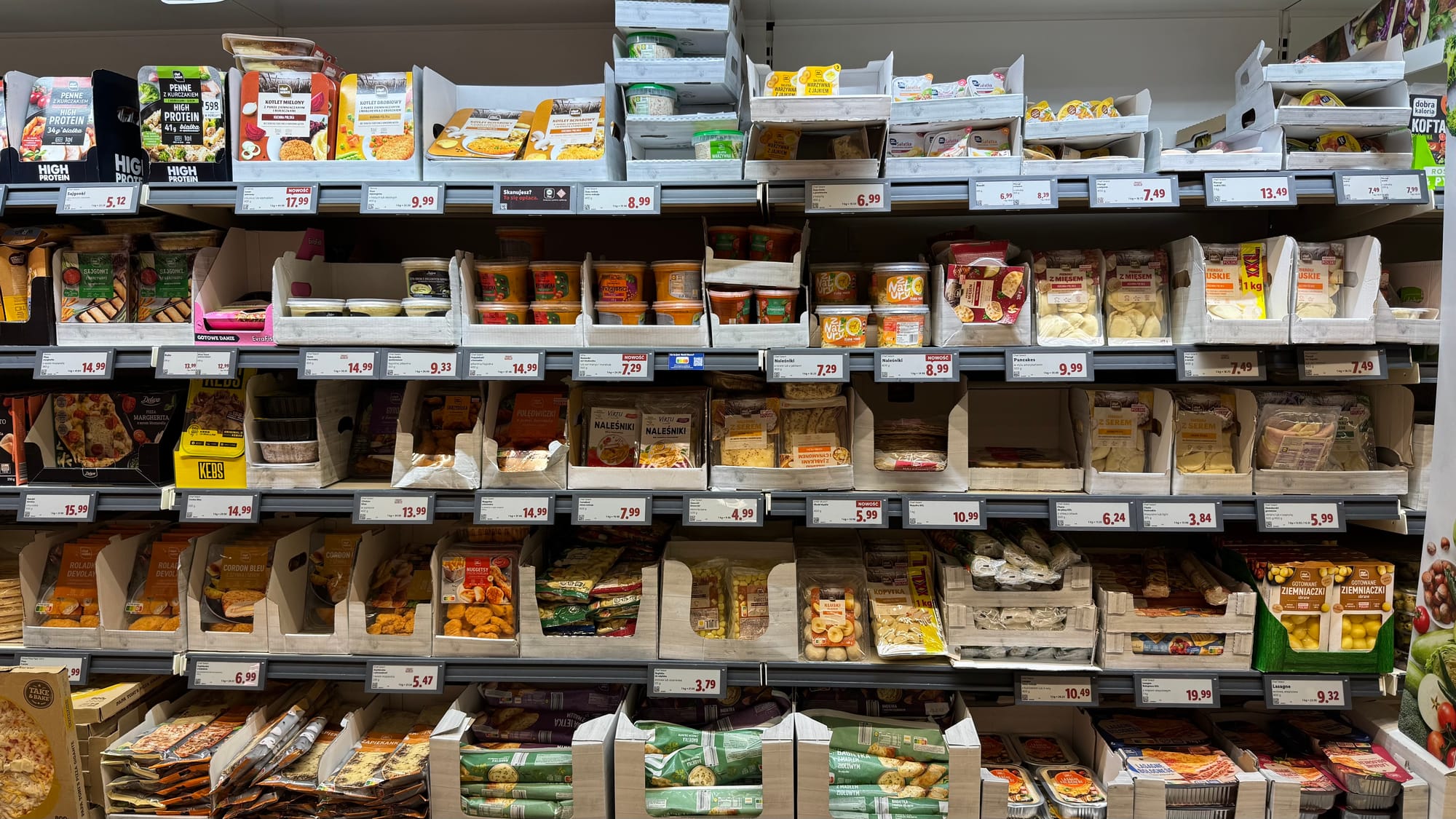
A few weeks ago, I found myself standing in front of a refrigerated aisle in a Polish Lidl, looking at pierogi.
There were several kinds, alongside naleśniki (Polish pancakes), kopytka (potato dumplings), krokiety, ready-cooked potatoes and various cutlets. Quite a substantial part of an ordinary Polish dinner, already prepared and waiting to be reheated.
And I started wondering what the same aisle might look like in Barcelona.
My assumption was fairly simple. If Polish supermarkets sell ready-made pierogi and kopytka, surely Spanish supermarkets must have their own equivalents. Tortilla de patatas, gazpacho, perhaps a few other local favourites. The sort of things people normally eat, only prepared for those days when nobody feels like cooking.
It seemed reasonable enough. So I took a photograph of the Polish shelves and decided to check the same thing in Barcelona.
As it turned out, I was partly right.
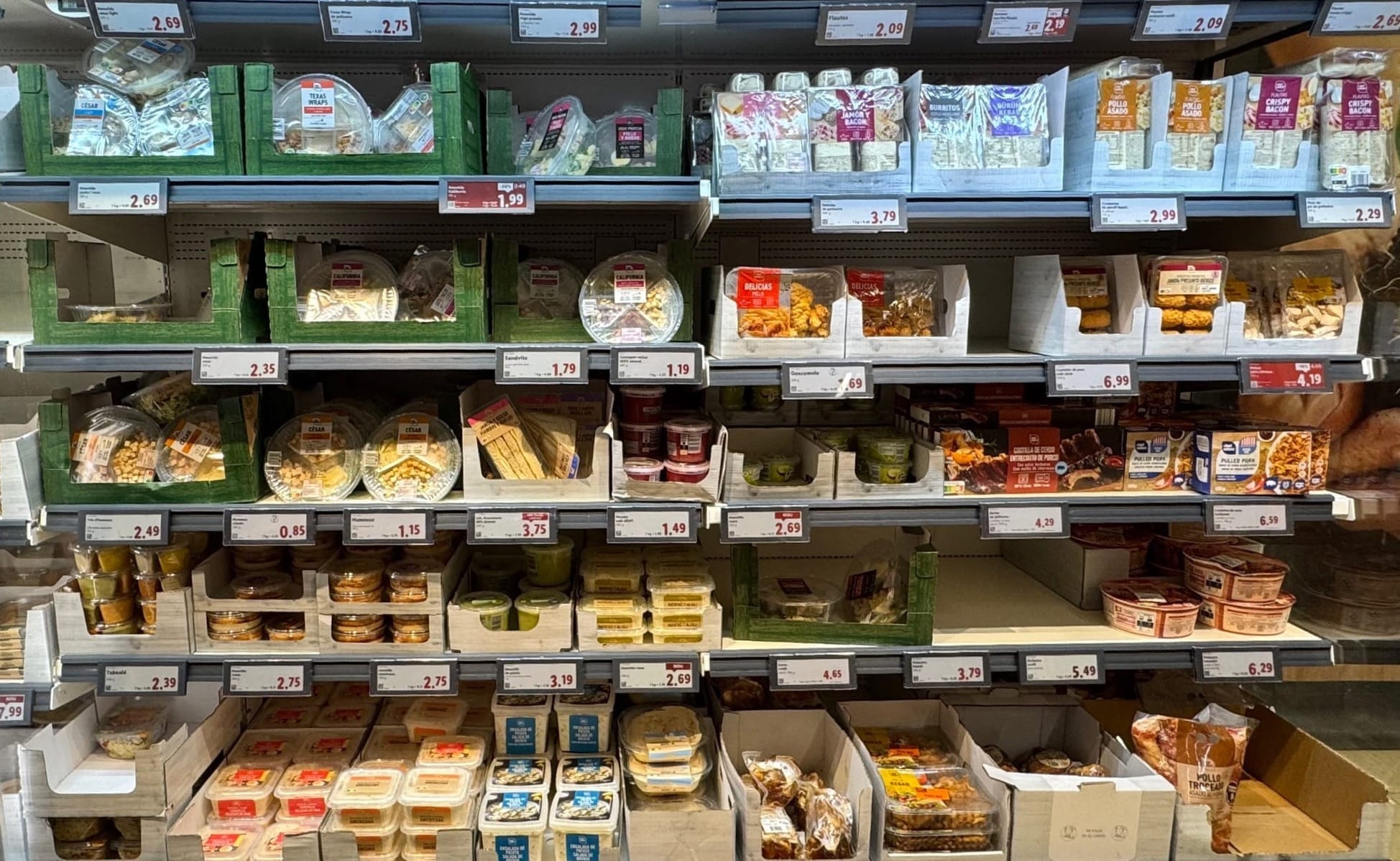
There was tortilla de patatas, of course. Gazpacho and salmorejo are perfectly ordinary supermarket products here, and empanadas are easy to find too. Nothing particularly surprising about that.
What surprised me was everything else.
The two Lidl refrigerators looked remarkably similar. Pizza, pasta, gyoza, wraps, salads, hummus, crêpes and various prepared meat dishes. The packaging was different, the prices were different, but much of the food was familiar.
I had expected something closer to a miniature exhibition of national cuisines. Polish dishes in Poland, Spanish dishes in Spain, with a few international additions.
But why would it work like that?
By the same logic, Italians would never buy supermarket pizza because they could simply go to a pizzeria. Which is a rather silly assumption when you think about it.
People do not organise their everyday meals according to the rules of national cuisine. They eat what they like, what is available, what they can afford and, quite often, what requires the least effort.
There is something wonderfully practical about convenience food.
You do not want to cook, but you do not necessarily want to go to a restaurant or order takeaway either. Perhaps you are tired, short of time or simply not in the mood. A supermarket meal offers a relatively inexpensive alternative.
Sometimes all you need is a microwave. Sometimes a frying pan or an oven. Even ready-made puff pastry belongs somewhere in this category: you still have to do something with it, but at least somebody else has already done the difficult part.
I am not much of a ready-meal person myself. I occasionally buy prepared soups, though. Making an entire pot of soup when you only want one bowl is not always worth the effort, and some of the supermarket versions are genuinely good.
For someone else, the perfect solution might be a ready-made cutlet with potatoes. It is not necessarily the most exciting dinner in the world, but it does the job.
And sometimes that is all dinner needs to do.
The idea itself is hardly new. Modern ready meals became particularly popular in post-war America, with the arrival of frozen TV dinners in the 1950s. Microwave ovens later made reheating food even quicker. Over time, the convenience of having most of the cooking done elsewhere became part of everyday life in many countries.
What ended up on the plate, however, still depended partly on where you lived.
I like the fact that supermarket shelves are not particularly interested in telling us stories about national identity.
Nobody puts several varieties of pierogi in a Polish Lidl to celebrate Polish culinary heritage. And nobody stocks tortilla de patatas in Barcelona because it might look charmingly Spanish to someone from abroad.
They are there because people buy them.
Of course, a supermarket shelf cannot tell us everything about what people actually eat. But it does show what retailers expect their customers to recognise, want and buy often enough to keep it in stock.
And that makes it a surprisingly interesting place to observe everyday culture.
My little comparison did not reveal two entirely different food worlds. Quite the opposite. The similarities were far greater than I had expected, although the local favourites were still there, sitting comfortably alongside pizza, gyoza and all the other international staples.
So perhaps my original assumption was not entirely wrong. It was just a little too focused on national dishes.
After all, whether you are in Poland or Barcelona, sometimes you simply want something for dinner without having to cook it.


